



What is Chip Tuning Stage 1, Stage 2, and Stage 3 and what is the difference?
Modern cars come with significant hidden potential. Automakers often artificially underestimate engine performance due to strict environmental regulations, marketing strategies (selling different configurations with the same engine), or as a hedge against low-quality fuel. High-quality car firmware allows you to remove these restrictions. But when it comes to tuning, you can often hear the term “stage”. Let’s find out what Stage 1 is, what is the difference between Stage 2 chip tuning and what the third level of refinement involves.
What is Stage 1? (Software only)
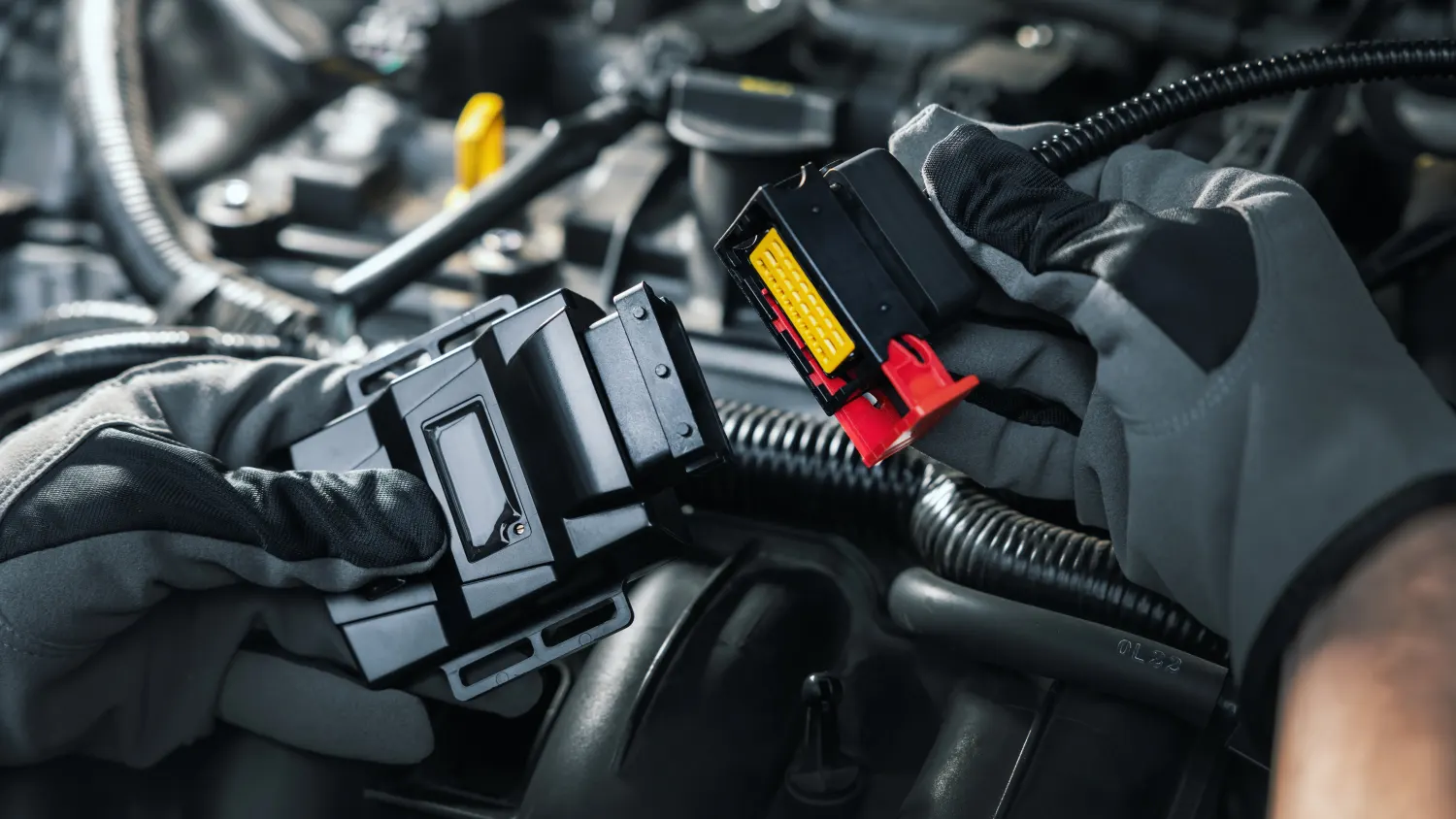
Stage 1 is the basic, safest, and most popular type of tuning. It is a purely software-based intervention in the electronic engine control unit (ECU) without any mechanical changes to the vehicle structure.
The specialist reads the factory program, adjusts the parameters (boost pressure, ignition timing, fuel supply) and writes a new, optimized version. This results in a noticeable increase in engine power and torque (on average by 15-30% for turbocharged engines). You can learn more about this service and its capabilities for your car on the professional chip tuning page.
Stage 2 chip tuning: when software alone is not enough
If you are not satisfied with the basic settings, the next step is Stage 2. The main difference between Stage 1 and Stage 2 is that the second level already requires mechanical intervention (replacement of hardware) to improve the engine’s breathing.
To allow the turbine to pump more air, the resistance of the exhaust gases must be reduced. Therefore, at this stage, a downpipe is usually installed – a pipe of increased diameter instead of the factory catalytic converter or diesel particulate filter (DPF). The air intake system is also often modernized. After the new parts are installed, the ECU must be individually firmware for these changes.
Stage 3: Uncompromisingly increasing engine power
This is deep tuning for those who are building a real powerful project. Stage 3 involves a major replacement of the factory components. This includes the installation of a more efficient turbine (or compressor), a larger intercooler for better air cooling, a more powerful fuel pump, sports injectors, and sometimes reinforcement of internal engine components (forged pistons, connecting rods).
The firmware for Stage 3 is written exclusively individually (often using a dyno), since the hardware configuration of each such car is unique.
The difference between Stage 1 and Stage 2: what to choose?
- Stage 1 is ideal for everyday city driving. The car remains completely in the factory version (with all catalysts and filters), but becomes much more dynamic, turbo lag and delays when pressing the gas pedal disappear.
- Stage 2 is the choice for enthusiasts who are ready to remove the environmental systems to maximize the performance of the stock turbo and get a more aggressive exhaust sound.
Is it safe for the car’s resource?
One of the most frequently asked questions. If the tuning is done by professionals, using proven and tested calibrations, the life of the engine and gearbox does not suffer. A properly tuned Stage 1 generally works within the factory strength tolerances of the parts. Of course, with a noticeable increase in power, the car will require a little more careful maintenance (for example, oil changes every 7-8 thousand kilometers instead of 15 thousand kilometers) and the use of high-quality fuel.
Ready to unleash the potential of your car?
The DieselProg team has over 10 years of hands-on experience in vehicle customization. We offer individual solutions for each client, whether it’s a safe basic chip tuning for a family car or a complex programmatic work with environmental removal.
We work locally in Wroclaw (Poland) and also provide online services throughout Europe! Contact us for a free consultation – we’ll analyze your car and find the best option for you.
Sign up for a consultation